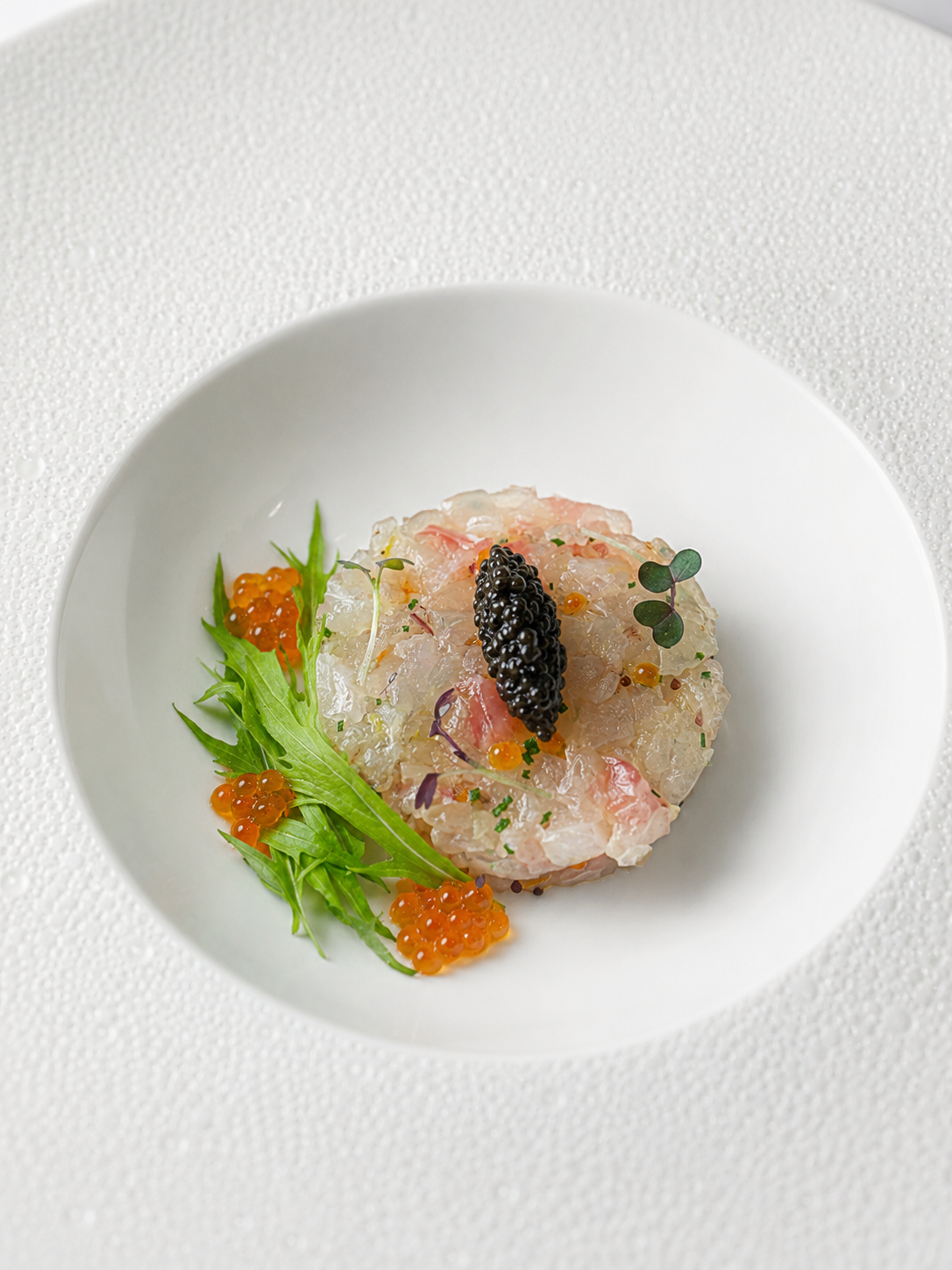
Some events need a proven favourite. Others need a menu that has never existed before.
At Tokyo Catering Club, we work with both. We maintain a catalogue of best-selling pieces, signature recipes and formats that have proved themselves across corporate, luxury and private events. It gives clients a useful starting point and allows recurring programmes to move quickly.
But when the brief calls for something more specific, the catalogue becomes a vocabulary rather than the answer. We start with the event itself: who is coming, why they are gathering, what the host or brand wants to express, what is in season, and how the food will actually be served.
This is where one of Japan’s most familiar dining ideas becomes particularly relevant to catering. For Tokyo Catering Club, an omakase-inspired approach to event catering means composing for the moment rather than forcing the moment into a fixed formula.
The Omakase Principle: Compose Around the Event
In its restaurant context, omakase is built on trust in the chef’s judgment. The Japan National Tourism Organization describes it as entrusting the chef with what is served.
Event catering is a different environment, but the principle travels well. The client defines the objective, audience, brand codes and constraints. Our role is to interpret that brief and build a coherent culinary answer around it.
That does not mean removing choice. A client may select one of our established signature pieces, ask us to develop around an existing favourite, or give us more freedom to compose. The important distinction is that the menu should serve the event, rather than asking the event to fit the menu.
For us, bespoke catering is not about offering an endless list of options. It is about bringing judgment to the brief.
What Kaiseki Adds: Season, Balance and the Whole
Kaiseki adds another influence. We do not reproduce its traditional format; we take from it a discipline of seasonality, proportion and attention to the meal as a whole. JNTO’s guide to kaiseki highlights the importance of seasonal ingredients and balance across flavour, texture, colour and presentation.
Japan’s food culture gives season a particularly visible role. The Ministry of Agriculture, Forestry and Fisheries describes shun as the period when an ingredient is at its seasonal peak.
For catering, the practical lesson is simple: the offering has to work as a whole. Ten individually good canapés can still make a repetitive menu. We look at contrast, richness, freshness, texture, temperature, dietary range and presentation together.
On a seated dinner, that thinking can create a real progression through courses. On a standing reception, guests may eat in no particular order, so the progression becomes compositional rather than chronological. The full offering still needs to feel deliberate.
Tokyo as an Advantage, Not a Limitation
Tokyo Catering Club is not defined by one national cuisine. Our chefs and culinary partners come from different backgrounds, and our menus may be French, Japanese, Mediterranean or take another direction entirely.
What working in Tokyo gives us is access to an exceptional culinary environment: Japanese seafood, meat, vegetables, fruit, rice, tea, citrus and regional specialties; suppliers we know and trust; and a culture in which season, product and presentation are taken seriously. We use Japanese ingredients when they strengthen the dish or make sense for the event, and imported products when they are essential to its identity or quality. We explore this sourcing philosophy further in International Catering in Tokyo: Japanese Ingredients, Global Inspiration.
This matters because many events in Tokyo bring different audiences together. A corporate host may be welcoming colleagues from several countries. A luxury brand may be speaking to Japanese clients and international guests in the same room. A private event may bring together people who know Japan intimately and others discovering it for the first time.
Our aim is to create food that feels natural to local guests while giving visitors a genuine sense of discovery. Sometimes that comes through a Japanese ingredient treated with a French technique. Sometimes through a familiar international dish made more relevant to the season in Japan. Sometimes the right answer is simply an excellent classic, left alone.
The point is not to force two cuisines together. It is to give guests the best of what our international kitchen and our place in Japan can offer.
One Principle, Different Client Briefs
The same approach can answer very different needs.
For a corporate client welcoming international teams, the priority may be a menu with enough range to feel inclusive without becoming generic, with dietary requirements integrated from the beginning. For a luxury house, the starting point may be a product, collection, colour, origin or creative direction that needs to be translated into food. For a private client, it may simply be the people in the room and the experience they want to share.
This client-first approach is central to our work across luxury brand activations, gala events and VIP hospitality, as well as large-scale and multi-day events in Tokyo and across Japan.
The cuisine changes. The attention we bring to composing it does not.
The Principle in Practice
Google Holiday Party: Composing at Scale
For a 2,500-guest corporate Holiday Party at Belle Salle Shibuya Garden, Tokyo Catering Club coordinated a programme built specifically for a highly international audience: 16 food concepts, 10 live chef stations and five bars. At that scale, composition is not only culinary. Variety, dietary inclusion, guest flow, service rhythm and operational consistency have to work together. Read the full 2,500-guest corporate catering case study.
Pieroth Japan: Starting With the Wine
For our collaboration with Pieroth Japan, the starting point was not a catering package but three wines, the season and an autumn home-party concept. The food was developed around those elements, resulting in three original pairings created specifically for the programme. The project is documented in our Pieroth Japan case study and on Pieroth Japan’s official pairing programme.
Romain Gauthier: Translating a Maison Into Food
For the opening of the world’s first Romain Gauthier salon in Ginza, the culinary direction connected Swiss watchmaking, Japanese seasonality and international fine-dining technique. The aim was not to demonstrate a house cuisine, but to create food that belonged to the maison, the Tokyo setting and the occasion. Read the Romain Gauthier salon case study.
EU–Japan Reception: Different Identities, One Event
At Europa House Tokyo, a diplomatic reception celebrating the EU–Japan relationship required dishes representing different European culinary identities while incorporating Japanese ingredients, seasonality and the local context. The menu was built to express the idea of the event rather than a single TCC style. Read the EU–Japan diplomatic reception case study.
Composition Has to Survive the Room
There is one major difference between a restaurant philosophy and a catering philosophy: our food has to leave the kitchen.
It travels. It waits. It may be passed on trays, held on a buffet, finished in a temporary kitchen, eaten standing or served simultaneously to hundreds of guests. That means transport, holding, equipment, replenishment, guest flow and service timing are part of menu design from the beginning.
A canapé that loses its structure after twenty minutes is not the right canapé. A plated dish that depends on infrastructure the venue cannot provide is not the right dish. Culinary ambition and operational execution have to be designed together — a principle we explore further in Why Event Hospitality in Japan Is Mostly an Operations Problem and in our broader article on culinary excellence, hospitality and precision in Tokyo.
How We Build a Menu
- Start with the event. Purpose, venue, format, guest profile, brand direction and dietary requirements.
- Look at the season and sourcing. What is at its best in Japan at that moment, and where an imported ingredient is genuinely necessary.
- Choose the culinary direction that serves the brief. French, Japanese, Mediterranean or another cuisine is a decision, not a default.
- Compose the offering as a whole. Signature pieces, client favourites and newly developed dishes can sit together when they make sense together.
- Test the menu against reality. Transport, holding, equipment, guest flow and service are part of the culinary decision.
This is why our catalogue and our bespoke work are not opposites. The catalogue gives us a repertoire of trusted best sellers, signature recipes and proven formats. The omakase-inspired approach gives us the freedom to edit, adapt, combine or create beyond that repertoire when the event deserves a different answer.
A Different Way to Think About Bespoke Catering in Tokyo
Clients should not have to become menu designers in order to order good catering. They should be able to explain the event they want to create, the people they are hosting, what they need to communicate and the constraints they face.
Our responsibility is to bring culinary judgment, local knowledge and operational experience to that brief.
That is where the omakase principle becomes useful to event catering: not as a restaurant format to imitate, but as a reminder to begin with the moment and compose the right answer.
Compose for the event. Compose for the guests. Compose for the moment.
Explore our selected corporate and luxury catering portfolio, learn more about Tokyo Catering Club, or contact our team to discuss a corporate reception, international event, luxury activation, private dinner or bespoke hospitality programme in Tokyo.
FAQ: Omakase-Inspired Event Catering in Tokyo
Does Tokyo Catering Club still offer a catering catalogue?
Yes. Our catalogue includes best-selling pieces, signature recipes and established event formats. Clients can use it as a starting point or ask us to compose more freely around a specific brief.
Does omakase-inspired catering mean Japanese cuisine?
No. The term describes how we approach composition. The cuisine may be French, Japanese, Mediterranean or another direction depending on the event, while Japanese ingredients and seasonality are used when they strengthen the result.
How does this approach work for international guests?
We design menus to feel natural to guests who live in Japan while also offering discovery to visitors. That can mean combining Japanese seasonal ingredients with international techniques, or simply choosing dishes that suit a mixed audience without becoming generic.
Can Tokyo Catering Club create a menu around a brand identity?
Yes. For corporate and luxury clients, a product, collection, colour, origin, season or wider creative direction can become the starting point for the culinary proposal.
「おまかせ」の考え方を、東京のイベントケータリングへ
定番が最適なイベントもあれば、そのイベントのためだけに新しいメニューをつくるべき場合もあります。
Tokyo Catering Clubには、これまで多くの企業イベント、ラグジュアリーイベント、プライベートイベントで提供してきた人気メニュー、シグネチャーレシピ、実績のあるサービス形式があります。定期的なご依頼や、スピード感のある提案が必要な場合には、こうしたカタログが有効な出発点になります。
一方で、より個別性の高いブリーフでは、カタログそのものが答えになるとは限りません。誰を迎えるのか、なぜ集まるのか、企業やブランドとして何を伝えたいのか、季節はいつか、どのような空間でどのように料理を提供するのか。私たちはイベントそのものから考え始めます。
そこで参考にしているのが、日本の食文化に根付く「おまかせ」の考え方です。Tokyo Catering Clubにとって、「おまかせ」から着想したケータリングとは、決まった型にイベントを合わせるのではなく、その時、その場、そのゲストに合わせて料理を構成することを意味します。
「おまかせ」から取り入れること:イベントから考える
本来の「おまかせ」には、何を提供するかを料理人の判断に委ねるという考え方があります。日本政府観光局(JNTO)でも、シェフに料理内容を任せるスタイルとして紹介されています。
もちろん、イベントケータリングはレストランとは異なります。しかし、この考え方はケータリングにも応用できます。イベントの目的、ゲスト、ブランドの世界観、会場条件、食事制限などをクライアントから共有いただき、それを料理として一つの答えにまとめることが私たちの役割です。
これは「選べない」という意味ではありません。実績のあるシグネチャーメニューを選ぶことも、人気メニューを軸に発展させることも、より大きくお任せいただくこともできます。大切なのは、イベントを既存メニューに合わせるのではなく、メニューがイベントに合っていることです。
私たちにとってオーダーメイドとは、選択肢を無限に増やすことではなく、ブリーフに対して適切な判断を加えることです。
懐石から取り入れること:季節、バランス、全体設計
もう一つの参考が懐石です。伝統的な形式を再現するのではなく、季節感、全体の比例、一品一品の関係まで考える姿勢を取り入れています。JNTOの懐石料理ガイドでも、旬の食材と、味・食感・色・盛り付けまで含めた全体のバランスが重視されています。
また、農林水産省が紹介する「旬」の考え方のように、日本の食文化では季節と食材の関係が非常に明確です。
ケータリングに置き換えると、ポイントはシンプルです。一品ごとではなく、提供全体として成立していること。 それぞれが美味しくても、同じ味、食感、重さ、食材が続けば、メニューは単調になります。私たちは、味、食感、温度、ボリューム、食事制限への対応、見た目を全体で考えます。
着席ディナーでは、コースの流れとして実際の「進行」をつくることができます。スタンディングイベントでは食べる順番を管理できないため、時間的な順序ではなく、提供全体の構成としてバランスをつくります。
東京という環境を強みに、料理の表現は自由に
Tokyo Catering Clubは、ひとつの国の料理だけで定義される会社ではありません。シェフや料理パートナーは異なるバックグラウンドを持ち、フレンチ、和食、地中海料理、その他さまざまな方向性に対応します。
東京で仕事をすることの大きな強みは、日本各地の魚介、肉、野菜、果物、米、茶、柑橘、地域食材などにアクセスできること、長く付き合うサプライヤーがいること、そして季節や食材を大切にする食文化の中で仕事ができることです。日本の食材が料理をより良くする場合には積極的に使い、料理のアイデンティティや品質に必要であれば海外の食材も使います。この考え方は、International Catering in Tokyo: Japanese Ingredients, Global Inspirationでも紹介しています。
東京のイベントでは、日本で暮らすゲストと、海外から訪れるゲストが同じ空間にいることも珍しくありません。企業イベントでは世界各国のチームを迎え、ラグジュアリーブランドでは日本のお客様と海外ゲストが同席することがあります。
私たちが目指すのは、日本のお客様には自然に楽しんでいただきながら、東京を訪れるゲストには新しい発見がある料理です。日本の旬の食材をフレンチの技法で仕立てることもあれば、世界で親しまれている料理を日本の季節に合わせて考えることもあります。そして、完成度の高い定番料理は、無理に変える必要もありません。
異なる料理を無理に融合するのではなく、国際的なキッチンの経験と、日本で仕事をするからこそ得られる食材や季節、その両方の良さをゲストに届けることが目的です。
同じ考え方を、異なるクライアントのために
世界各国からチームを迎える企業イベントでは、幅広いゲストが自然に楽しめる料理と、食事制限への対応が必要です。ラグジュアリーブランドでは、商品、コレクション、色、ブランドのルーツ、クリエイティブディレクションを料理へ翻訳することがあります。プライベートイベントでは、ゲストの顔ぶれや、その時間をどう過ごしたいかが出発点になります。
この考え方は、ラグジュアリーブランド、ガラ、VIPホスピタリティから、東京および日本全国の大規模・複数日イベントまで共通しています。
料理の方向性は変わっても、全体を丁寧に構成する姿勢は変わりません。
実際のイベントで見るアプローチ
2,500名規模のCorporate Holiday Party:大規模でも全体を構成する
Belle Salle Shibuya Gardenで開催された2,500名規模のCorporate Holiday Partyでは、16のフードコンセプト、10のライブシェフステーション、5つのバーを含むプログラムを構成しました。この規模では、料理の多様性だけでなく、食事制限、ゲスト導線、サービスのリズム、オペレーションの一貫性まで一つの全体として考える必要があります。詳細は2,500名規模のケータリング事例をご覧ください。
Pieroth Japan:メニューではなくワインから始める
Pieroth Japanとのプロジェクトでは、出発点は既存のケータリングパッケージではなく、3本のワイン、秋という季節、ホームパーティーというテーマでした。そこから3つのオリジナルペアリングを開発しています。詳細はTokyo Catering Club × Pieroth Japanの事例およびPieroth Japan公式ペアリングプログラムでご覧いただけます。
Romain Gauthier:メゾンの世界観を料理へ翻訳する
銀座にオープンした世界初のRomain Gauthierサロンでは、スイスの時計文化、日本の季節感、国際的なファインダイニングの技術をつなぐ料理を構成しました。目的はTokyo Catering Clubの「固定された料理」を見せることではなく、メゾン、東京という場所、そのイベントにふさわしい料理をつくることでした。Romain Gauthierサロンの事例もご覧ください。
EU–Japanレセプション:異なる食文化を一つのイベントへ
Europa House Tokyoで開催されたEU–Japan関連の外交レセプションでは、ヨーロッパ各国の料理的アイデンティティを、日本の食材、季節、東京という開催地と結びつけることが求められました。ここでも、ひとつの「TCC料理」を押し出すのではなく、イベントの目的そのものを料理で表現しています。詳細はEU–Japan外交レセプションの事例をご覧ください。
ケータリングでは、料理は会場でも成立しなければならない
レストランとの大きな違いは、料理がキッチンを出たあとも成立し続けなければならないことです。
運ばれ、待機し、トレーで提供され、ビュッフェで保たれ、仮設キッチンで仕上げられ、立ったまま食べられ、時には数百名へ同時に提供されます。そのため、輸送、保温・保冷、設備、補充、ゲスト導線、サービス時間まで、最初からメニュー設計の一部です。
20分後に形が崩れるカナッペは、そのイベントにとって正しい料理ではありません。会場にない設備を前提にした料理も同じです。料理とオペレーションを一体で考える理由については、Why Event Hospitality in Japan Is Mostly an Operations ProblemおよびTokyo Catering Clubの料理・ホスピタリティ・オペレーションに関するフィロソフィーでも紹介しています。
メニューをどう構成するか
- イベントから始める。 目的、会場、形式、ゲスト、ブランドの方向性、食事制限を確認します。
- 季節と食材を見る。 その時期の日本で何が良いか、どこで輸入食材が本当に必要かを考えます。
- ブリーフに合う料理の方向性を決める。 フレンチ、和食、地中海料理、その他の料理は、固定スタイルではなく選択肢です。
- 全体として構成する。 シグネチャーメニュー、クライアントのお気に入り、新しく開発した料理も、全体として意味があれば一緒に組み立てます。
- 現場で成立するかを確認する。 輸送、保温・保冷、設備、ゲスト導線、サービスまで料理の判断に含めます。
だからこそ、カタログとオーダーメイドは対立するものではありません。カタログには、信頼できる人気メニュー、シグネチャーレシピ、実績のある形式があります。「おまかせ」から着想したアプローチは、必要に応じてそこから選び、編集し、組み合わせ、あるいは新しくつくるための考え方です。
東京のオーダーメイドケータリングを、もう一歩先へ
良いケータリングを依頼するために、クライアント自身がメニューの専門家になる必要はありません。どのようなイベントをつくりたいのか、誰を迎えるのか、何を伝えたいのか、どのような制約があるのかを共有いただければ十分です。
そこに料理の判断、東京での知識、現場運営の経験を加えることが私たちの役割です。
私たちにとって「おまかせ」の考え方がイベントケータリングに有効なのは、レストランの形式を再現するためではありません。その瞬間とブリーフから始め、そのイベントに合う答えを構成するという考え方が、ケータリングにも非常に有効だからです。
イベントのために。ゲストのために。その瞬間のために、構成する。
Tokyo Catering Clubのポートフォリオ、Tokyo Catering Clubについてもご覧ください。東京で企業レセプション、国際イベント、ラグジュアリーブランドのアクティベーション、プライベートディナー、オーダーメイドのホスピタリティをご検討の場合は、お問い合わせください。
FAQ:「おまかせ」から着想したイベントケータリング
Tokyo Catering Clubには通常のケータリングメニューやカタログもありますか?
はい。人気メニュー、シグネチャーレシピ、実績のあるイベント形式をご用意しています。カタログを出発点にすることも、より自由度の高いブリーフから全体を構成することも可能です。
「おまかせ」から着想したケータリングとは、和食のことですか?
いいえ。「おまかせ」は料理ジャンルではなく、イベント、季節、ゲスト、ブリーフに合わせて全体を構成する考え方を指しています。料理の方向性はフレンチ、和食、地中海料理、その他さまざまです。
日本のお客様と海外ゲストが混在するイベントにも向いていますか?
はい。日本で暮らすゲストには自然に楽しめ、海外からのゲストには東京ならではの発見があることを意識してメニューを構成します。日本の旬の食材と国際的な技法を組み合わせる場合もあれば、幅広いゲストに合う完成度の高い定番料理を選ぶ場合もあります。
ブランドの世界観に合わせたメニュー開発もできますか?
はい。商品、コレクション、色、ブランドのルーツ、季節、クリエイティブディレクションなどを出発点に、料理とホスピタリティへ翻訳することが可能です。