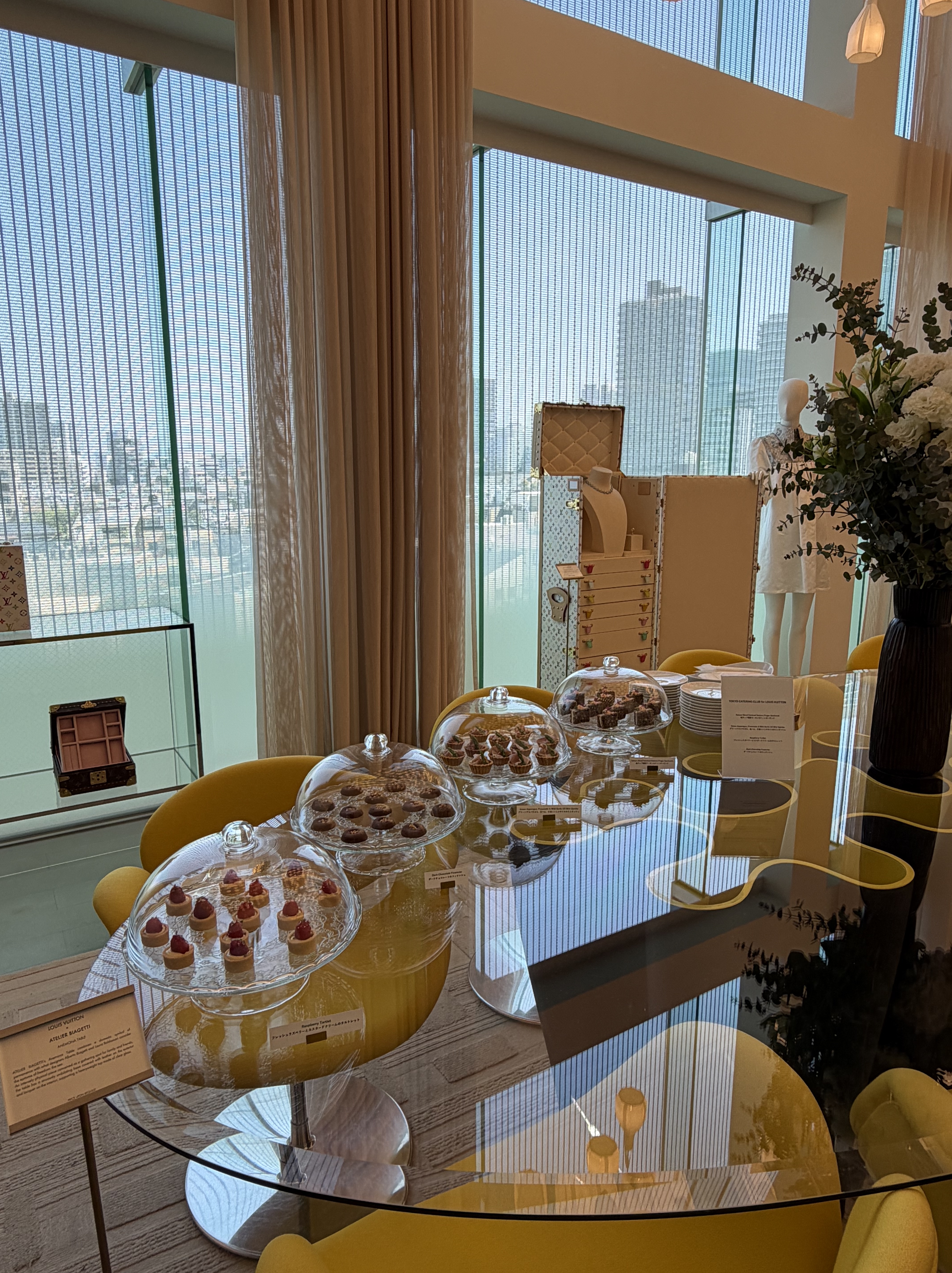
Tokyo Catering Club
Premium catering and hospitality company based in Tokyo, supporting luxury brands, international corporations, embassies and VIP events across Japan.
Tokyo is one of the most sophisticated luxury markets in the world — but also one of the most operationally demanding.
For international brands organizing events in Japan, hospitality involves far more than food, decoration or guest lists. Successful luxury events in Tokyo depend heavily on logistics, timing, venue restrictions, cultural understanding and discreet operational execution.
Many overseas teams arrive in Japan expecting event production to function similarly to Paris, London, Dubai or New York. In reality, Tokyo operates very differently.
Luxury boutiques often prohibit onsite cooking. Office towers may require advance security clearance. Delivery windows are frequently limited. Building management teams expect extremely precise coordination. Even small operational mistakes can affect the guest experience and brand perception.
For luxury maisons, automotive brands, watchmakers, embassies and global companies, selecting the right hospitality partner in Tokyo is therefore not simply a catering decision — it is an operational one.
WHAT LUXURY BRANDS, GLOBAL AGENCIES AND INTERNATIONAL COMPANIES NEED TO KNOW BEFORE ORGANIZING VIP EVENTS IN TOKYO.
1. TOKYO LUXURY EVENTS REQUIRE EXTREMELY PRECISE OPERATIONS
In areas such as Ginza, Omotesando, Roppongi, Marunouchi and Shibuya, luxury event operations are highly regulated.
International clients are often surprised to discover that:
- delivery access may only be authorized during short time windows,
- elevators sometimes require prior reservation,
- cooking equipment may be prohibited,
- waste disposal procedures are strictly controlled,
- and setup operations must often remain completely silent.
For luxury retail environments, hospitality teams are also expected to operate discreetly without disturbing customers, store staff or the visual identity of the boutique.
In Tokyo, operational smoothness itself is considered part of the luxury experience.
2. MANY PREMIUM VENUES IN TOKYO DO NOT HAVE KITCHENS
One of the biggest differences between Japan and many international markets is the number of premium venues without production kitchens.
This includes:
- luxury boutiques,
- galleries,
- rooftops,
- private clubs,
- temples,
- office lounges,
- historical venues,
- and temporary activation spaces.
As a result, hospitality teams must be able to:
- prepare food externally,
- transport it safely,
- maintain temperature control,
- finalize service with minimal onsite equipment,
- and adapt quickly to restricted environments.
This is one reason premium finger food and high-end bento formats remain extremely important in Japan.
They allow:
- elegant presentation,
- operational efficiency,
- discreet service,
- and flexibility in venues with limited infrastructure.
3. BILINGUAL COORDINATION IS ESSENTIAL FOR INTERNATIONAL EVENTS IN JAPAN
One of the biggest operational risks during luxury events in Japan is miscommunication between overseas teams and local operators.
International projects often involve:
- overseas headquarters,
- local marketing teams,
- venue management,
- production agencies,
- building operators,
- and hospitality suppliers.
Without strong bilingual coordination, misunderstandings can affect:
- setup timing,
- branding restrictions,
- alcohol service,
- security procedures,
- staffing,
- guest flow,
- and VIP management.
For this reason, bilingual hospitality coordination is not simply a convenience in Japan — it is essential.
Professional event operations in Tokyo require:
- English and Japanese communication,
- understanding of Japanese business etiquette,
- detailed operational planning,
- rapid onsite decision-making,
- and the ability to adapt calmly under pressure.
For European luxury brands, French-speaking coordination can also be highly valuable during VIP activations and executive events.
4. JAPANESE LUXURY HOSPITALITY PRIORITIZES DISCRETION
International luxury events are often associated with large-scale visual production and highly visible service.
In Japan, luxury hospitality tends to follow a different philosophy.
Premium hospitality standards in Tokyo usually prioritize:
- precision,
- discretion,
- calm execution,
- punctuality,
- cleanliness,
- and consistency.
Guests may not consciously notice every operational detail, but they immediately notice when something feels disorganized.
For luxury brands, hospitality quality is often judged through:
- smooth guest flow,
- discreet staff presence,
- accurate dietary handling,
- silent replenishment,
- and overall operational fluidity.
This is particularly important for:
- watch and jewelry launches,
- automotive showroom events,
- luxury retail activations,
- embassy receptions,
- and executive dinners.
In Japan, discretion is often perceived as a form of luxury itself.
5. VIP HOSPITALITY AND PRIVATE AVIATION ARE GROWING RAPIDLY IN JAPAN
Private aviation hospitality has become an increasingly important segment of premium catering in Japan.
At Haneda Airport and Narita International Airport, VIP travelers and private jet operators increasingly require:
- premium inflight catering,
- last-minute hospitality support,
- luxury gifting,
- and transport-adapted presentation formats.
Unlike traditional event catering, private aviation hospitality requires:
- extremely precise timing,
- airport security coordination,
- compact luxury packaging,
- and menus adapted to inflight consumption.
For international executives, celebrities, ambassadors and VIP delegations arriving in Japan, operational responsiveness has become a critical expectation.
Beyond Operational Complexity: The Level of the Room
The standard expected at luxury and executive events in Tokyo is also defined by the people in the room.
Tokyo Catering Club recently supported an event organized by the French Chamber of Commerce and Industry in Japan (CCIFJ) as a sponsor. According to the event recap published by the CCIFJ, attendees included senior executives from some of the world’s most respected luxury and business institutions, including Édouard Faure, CEO of Louis Vuitton Japan; Akiko Yamamoto, President & CEO of Van Cleef & Arpels Japan; Maxence Drevon-Balas, CEO of Jaeger-LeCoultre Japan; and Benjamin Lambert, CEO of Crédit Agricole CIB Japan.
View the official CCIFJ event recap
At this level, catering is not a background service. It is part of the impression the event makes. Discretion, flawless execution and attention to detail are not optional — they are the baseline expectation.
6. PREMIUM BENTO CULTURE PLAYS A MAJOR ROLE IN JAPANESE CORPORATE HOSPITALITY
In Japan, premium bentos remain one of the most important hospitality formats for luxury corporate events.
Unlike in many Western countries, high-end bentos are widely accepted for:
- executive meetings,
- press events,
- investor presentations,
- luxury activations,
- and multi-day conferences.
Premium bentos are particularly effective because they:
- simplify venue logistics,
- allow precise service timing,
- maintain presentation consistency,
- and adapt well to restricted venues.
Modern premium bentos in Tokyo frequently include:
- seasonal Japanese ingredients,
- vegetarian and vegan options,
- halal-friendly alternatives,
- individually plated desserts,
- and luxury packaging elements.
For international companies operating events across several days, premium bentos often provide one of the most efficient and elegant hospitality solutions available in Japan.
TYPICAL LUXURY HOSPITALITY FORMATS IN TOKYO
Hospitality FormatTypical Guest CountTypical EnvironmentVIP Boutique Reception20–80 guestsLuxury retailExecutive Cocktail Reception30–300 guestsOffices / ShowroomsPrivate VIP Dinner6–30 guestsPrivate venuesPress & Media Hospitality20–150 guestsBrand activationsMulti-Day Corporate Event50–2,500 guestsConferences / Temporary venues
FREQUENTLY ASKED QUESTIONS
DO LUXURY BOUTIQUES IN TOKYO USUALLY ALLOW ONSITE COOKING?
In most cases, no. Many luxury retail spaces prohibit cooking equipment or food preparation onsite.
IS BILINGUAL COORDINATION IMPORTANT FOR LUXURY EVENTS IN JAPAN?
Yes. Communication between overseas teams and local venue operators is critical for smooth event execution.
CAN PREMIUM HOSPITALITY BE ORGANIZED WITHOUT A KITCHEN ONSITE?
Yes. This is extremely common in Tokyo and requires adapted logistics and preparation systems.
ARE PREMIUM BENTOS CONSIDERED ACCEPTABLE FOR LUXURY EVENTS?
Absolutely. High-end bentos are widely used in Japanese corporate and luxury hospitality environments.
HOW EARLY SHOULD LUXURY EVENTS BE PLANNED IN TOKYO?
Several weeks or months in advance is recommended, particularly for customized or large-scale projects.
TOKYO LUXURY HOSPITALITY REQUIRES LOCAL EXPERTISE
Tokyo remains one of the most sophisticated luxury environments in the world, but also one of the most operationally demanding.
For international brands, successful hospitality in Japan depends not only on aesthetics or cuisine, but on the ability to execute complex operations discreetly, efficiently and reliably.
Tokyo Catering Club supports luxury brands, embassies, corporate groups and international agencies with premium catering and hospitality operations across Tokyo and Japan.
東京におけるラグジュアリーブランド向けホスピタリティ完全ガイド
外資系ブランド・高級メゾン・海外エージェンシーが日本でVIPイベントを開催する際に知っておくべきこと
東京は、世界でも特に洗練されたラグジュアリーマーケットの一つです。
その一方で、イベント運営という観点では、非常に高いオペレーション精度が求められる都市でもあります。
海外では問題にならないような細かな部分が、東京ではイベント全体の品質やブランドイメージに大きく影響するケースも少なくありません。
特に銀座、表参道、六本木、丸の内、渋谷などのエリアでは、高級ブティックや大型商業施設、オフィスビルごとに独自の運営ルールが存在します。
例えば:
- 搬入時間が厳密に制限されている
- エレベーター利用に事前申請が必要
- 現地調理が禁止されている
- ゴミ処理ルールが細かく定められている
- 静かな設営オペレーションが求められる
- VIP導線管理への配慮が必要
など、通常のイベント運営とは異なる対応力が必要になります。
そのため東京におけるラグジュアリーイベントでは、単なる「ケータリング会社」ではなく、ブランド体験全体を理解したホスピタリティパートナーとしての役割が重要になります。
東京で増えているラグジュアリーイベントの種類
近年、東京では以下のようなハイエンドイベント需要が増加しています。
- ラグジュアリーブランドのポップアップ
- 高級時計・ジュエリーの新作発表
- 自動車ブランドのローンチイベント
- 外資系企業のカクテルレセプション
- VIP顧客向けプライベートディナー
- 大使館関連イベント
- 国際カンファレンス
- プレス・メディア向けイベント
- インフルエンサー・VIP向けホスピタリティ
特に海外ブランドの場合、日本市場特有のオペレーション文化を理解した現地パートナーの存在が非常に重要になります。
東京で重要視される「静かなオペレーション」
日本のラグジュアリーホスピタリティでは、「目立たない完成度」が重視されます。
欧米型の派手な演出よりも、
- スムーズなサービス
- 静かな設営
- 無駄のない導線
- 正確なタイミング
- 清潔感
- 落ち着いた接客
などが、高級感として評価される傾向があります。
特にラグジュアリーブティックやVIPイベントでは、スタッフが過度に目立たず、空間やブランド世界観に自然に溶け込むことが重要視されます。
厨房のない会場でのイベント運営
東京では、厨房設備を持たない会場でイベントが開催されるケースも非常に多くあります。
例えば:
- 高級ブティック
- ギャラリー
- ルーフトップ
- 寺院
- プライベートラウンジ
- オフィスラウンジ
などです。
そのためケータリング会社には、
- 外部キッチンでの事前準備
- 温度管理
- コンパクトな搬入
- 限られた設備での仕上げ
- スムーズなサービス運営
など、高度な柔軟性が求められます。
このような背景から、日本ではプレミアム弁当やフィンガーフード形式が現在でも非常に重要なホスピタリティフォーマットとなっています。
TOKYO CATERING CLUBについて
Tokyo Catering Clubは、東京を拠点とするプレミアムケータリングおよびホスピタリティ会社です。
外資系企業、ラグジュアリーブランド、大使館、金融機関、国際イベント向けに、東京および日本全国でハイエンドなケータリング・VIPホスピタリティサービスを提供しています。
主な対応内容:
- プレミアムケータリング
- ラグジュアリーブランドイベント
- カクテルレセプション
- VIPディナー
- プレミアム弁当
- バイリンガル対応
- 大規模イベント運営
- プライベートアビエーション向けケータリング
- 外資系企業向けホスピタリティ運営
Leave a Reply