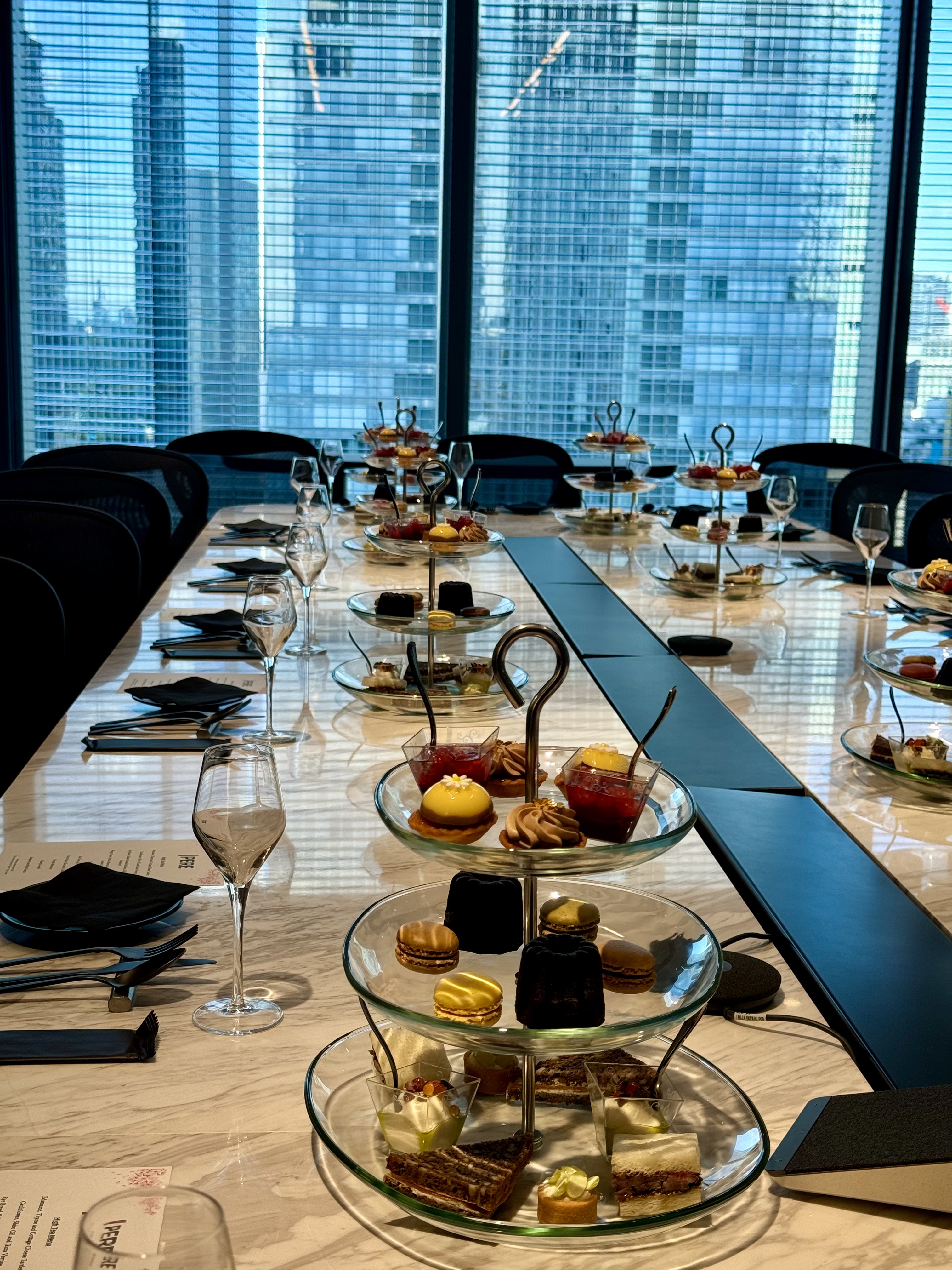
For international companies organizing events in Japan, choosing a catering partner in Tokyo can quickly become surprisingly complex.
At first glance, many catering proposals may appear similar — menu selections, beverage packages, staffing options, service formats. But in practice, corporate hospitality in Tokyo is often defined less by the food itself than by the operational capability behind it.
Because in Tokyo, a catering company is rarely just providing food. It is managing timing, logistics, venue adaptation, guest flow, dietary requirements, brand image and operational risk simultaneously — often inside environments never originally designed for hospitality at all.
Understanding what actually separates a strong hospitality partner from an average one in Tokyo can make the difference between an event that feels effortless and one that creates problems no one anticipated.
Flexibility Is Not Optional — It Is the Core Requirement
Tokyo’s event landscape is uniquely demanding.
Luxury boutiques in Ginza may have no production kitchen and no freight access whatsoever. Corporate towers in Marunouchi impose freight elevator booking deadlines that must be secured days in advance — and setup windows that are often limited to early morning hours before building operations begin. Showrooms and galleries in Omotesando require invisible setup and breakdown to preserve the guest environment, with equipment movements restricted to specific time slots approved by building management. Historical venues, temples and rooftops may have no running water, no external waste disposal access and strict limits on electricity usage that affect every aspect of production planning.
In many cases, hospitality teams in Tokyo are also required to obtain formal building management approvals before any catering equipment can enter the premises — a process that can take several days and requires detailed documentation of every item being brought on site.
In this context, operational flexibility is not a nice-to-have. It is the fundamental requirement that separates companies capable of delivering premium hospitality in Tokyo from those that simply cannot.
The right catering partner must be able to adapt its entire operation — production, staffing, equipment, timing, service format — to environments it has sometimes never accessed before, while maintaining consistently high standards throughout.
This is precisely what distinguishes Tokyo Catering Club’s approach. Rather than applying standardized structures to every project, each hospitality concept is built from scratch around the actual venue, the audience profile, the brand environment and the operational constraints that will define what is actually possible on the day.
Seriousness Means Owning the Entire Operation — From Production to Service
One of the most important questions to ask a potential catering partner in Tokyo is simple: who is actually managing your event?
In many cases, catering companies subcontract significant portions of the operation — kitchen production, staffing, equipment, logistics — to third parties they do not directly control. The result is an operation where accountability is fragmented, communication is indirect and the risk of something going wrong increases at every handover point.
For corporate clients, luxury brands and embassies where operational failure is not an option, this model represents a serious risk.
A genuinely serious hospitality operator manages the full production chain directly — from menu conception and ingredient sourcing through kitchen preparation, cold chain logistics, on-site setup, service execution and event breakdown.
Tokyo Catering Club maintains direct control over the full food and beverage operation across every project — including production, staffing, logistics, equipment and on-site management. When something needs to be adapted on the day of the event, the decision is made immediately by the team present, without escalation through subcontractors or external vendors.
This end-to-end ownership is one of the primary reasons Tokyo Catering Club has been trusted for operationally complex projects including private gastronomic dinners inside Ginza luxury boutiques with no kitchen on site, VVIP receptions inside Rolls-Royce showrooms, full-day brand activations inside temple environments, Porsche electric vehicle launch hospitality and multi-day executive workplace programs for international corporate teams operating between Japan and overseas offices.
References Define Credibility in Tokyo’s Premium Market
In Tokyo, reputation circulates quietly — between executive assistants, PR agencies, venue managers, luxury maisons and embassy contacts. A catering company’s client references are often the strongest indicator of whether it can genuinely perform at the level a corporate or luxury event requires.
The relevant question is not simply whether a company has served large numbers of guests. It is whether they have successfully executed inside the types of environments, for the types of clients and at the level of sophistication that your event requires.
Tokyo Catering Club has supported hospitality operations for luxury brands including Tiffany & Co., Louis Vuitton, Porsche, Rolls-Royce and Romain Gauthier, alongside technology companies such as OpenAI, corporate institutions including Crédit Agricole CIB Japan, Sony Music Entertainment and the Asian Development Bank, and diplomatic and institutional clients including European embassies and the French Chamber of Commerce and Industry in Japan.
These references span luxury retail activations, executive corporate programs, diplomatic receptions and large-scale corporate events — and reflect a consistent ability to deliver premium hospitality across a genuinely wide range of environments, guest profiles and operational contexts.
Bilingual Operations Are Non-Negotiable
For international companies organizing events in Tokyo, bilingual operational capacity is essential — and it goes significantly beyond having one English-speaking account manager.
Real bilingual capability means the on-site hospitality team can communicate fluidly with Japanese venue managers, security teams and building coordinators while simultaneously managing English-speaking international organizers and guests throughout the event.
In Tokyo, building access procedures, freight elevator coordination, waste disposal approvals and venue-specific operational rules are almost always communicated exclusively in Japanese — and often at short notice. A catering team that cannot navigate these conversations directly creates immediate operational risk for the organizing company.
Communication breakdowns between catering teams and venue operations are among the most common causes of problems at corporate events in Tokyo — invisible in a proposal, immediately apparent during the event itself.
Tokyo Catering Club operates bilingually across the full project lifecycle — from initial briefing and proposal through venue coordination, production management and on-site execution — ensuring that nothing is lost between the client’s expectations and what actually happens on the ground.
The Right Question to Ask
When choosing a caterer for a corporate event in Tokyo, the most important question is rarely about menu selection or beverage packages.
It is: can this operator manage the full hospitality experience — production, logistics, staffing, service and brand alignment — with complete operational control, inside the exact environment where our event will take place?
In Tokyo, premium hospitality is rarely judged by the food alone. Food is only one of the components. More often, it is judged by how smoothly everything operates around it — especially when guests never notice the complexity behind the scenes.
Tokyo Catering Club supports corporate events, luxury brand activations, diplomatic receptions and executive hospitality programs across Tokyo — with full end-to-end operational management, bilingual coordination and a client portfolio spanning global luxury brands, multinational corporations and diplomatic institutions.
For inquiries: contact@tokyocateringclub.com
東京で企業イベント向けケータリング会社を選ぶ際に本当に重要なこと
日本で企業イベントを開催する海外企業にとって、東京で適切なケータリングパートナーを選ぶことは、想像以上に複雑なプロセスになることがあります。
一見すると、多くのケータリング提案は似ているように見えます。
メニュー内容、ドリンクプラン、スタッフ数、サービス形式――どれも大きな違いがないように感じられるかもしれません。
しかし実際には、東京のコーポレートホスピタリティにおいて重要なのは、料理そのものよりも、その裏側にある「オペレーション能力」であることがほとんどです。
東京では、ケータリング会社は単に食事を提供するだけではありません。
タイミング管理、搬入出、会場適応、ゲスト導線、食事制限対応、ブランドイメージ、そしてイベント全体の運営リスクまで、同時にコントロールしています。
しかも多くの場合、その舞台は、そもそも飲食サービスを前提として設計されていない空間です。
本当に信頼できるホスピタリティパートナーと、そうではない会社の違いを理解することは、「何も問題が起きなかったイベント」と、「予想外のトラブルが次々発生するイベント」を分ける大きな要素になります。
柔軟性は“プラス要素”ではなく、東京では必須条件
東京のイベント環境は、世界でも非常に特殊です。
銀座のラグジュアリーブティックには、そもそもキッチンが存在しないケースもあります。さらに、搬入用エレベーターすら使えない会場も珍しくありません。
丸の内のオフィスタワーでは、搬入用エレベーターの予約を数日前までに取得する必要があり、設営時間もビル運営開始前の早朝に限定されることがあります。
表参道のショールームやギャラリーでは、ブランド空間を維持するため、設営・撤収を「完全に見えない状態」で行うことが求められます。機材搬入の時間帯も、ビル管理側が指定した枠内のみ許可されるケースが一般的です。
また、寺院、歴史的建築、屋上会場などでは、外部ゴミ廃棄不可、水道なし、電力制限あり、といった条件がイベント全体の設計に大きく影響します。
さらに東京では、多くの会場で「事前搬入申請」が必要になります。
持ち込む機材を事前に細かく申告し、ビル管理会社の承認を得なければならないケースも多く、準備だけで数日かかることもあります。
この環境において、オペレーションの柔軟性は「あれば便利」なものではありません。
それは、東京で本当にプレミアムホスピタリティを成立させられる会社と、そうでない会社を分ける根本的な条件です。
適切なケータリングパートナーとは、会場、ブランド環境、ゲスト属性、運営制約に合わせて、キッチン、生産、スタッフ、タイミング、サービス形式そのものを柔軟に再設計できる会社です。
Tokyo Catering Club は、まさにこの考え方をベースに運営されています。
既成の宴会形式をそのまま当てはめるのではなく、すべてのプロジェクトを、実際の会場環境と運営条件に合わせてゼロから構築しています。
“本当に信頼できる運営会社”は、全体を自社でコントロールしている
東京でケータリング会社を選ぶ際、最も重要な質問の一つがあります。
「実際に誰がイベントを管理しているのか?」
東京では、多くのケータリング会社が、
- キッチン生産
- スタッフ
- 機材
- 配送
- 現場運営
の大部分を外部業者へ再委託しています。
その結果、責任範囲が分散し、コミュニケーションが間接化し、問題発生時の対応スピードも大きく低下します。
ラグジュアリーブランド、外資系企業、大使館案件のように「失敗が許されないイベント」において、この構造は非常に大きなリスクになります。
本当に信頼できるホスピタリティオペレーターは、メニュー設計、仕入れ、調理、冷蔵管理、搬入、サービス、撤収まで、全体を直接コントロールしています。
Tokyo Catering Club では、すべてのプロジェクトにおいて、
- 生産
- スタッフ
- ロジスティクス
- 機材
- 現場マネジメント
を自社で統括しています。
イベント当日に変更や調整が必要になった場合も、現場チームが即座に判断・対応できる体制を取っています。
この「エンド・ツー・エンド」の管理体制こそが、Tokyo Catering Club が、
- 銀座ラグジュアリーブティックでのガストロノミーディナー
- Rolls-Royce ショールームでのVVIPレセプション
- 寺院空間でのブランドアクティベーション
- Porsche EVローンチイベント
- 国際企業向けマルチデイ・ワークプレイスホスピタリティ
など、オペレーション難易度の高い案件を継続的に任されている理由の一つです。
東京のプレミアム市場では「実績」が信頼を定義する
東京では、評判は静かに広がります。
エグゼクティブアシスタント、PR会社、会場担当者、ラグジュアリーメゾン、大使館関係者――そのネットワークの中で、「どの会社が本当に任せられるか」が共有されていきます。
重要なのは、単純なゲスト人数ではありません。
その会社が、
- どのような環境で、
- どのレベルのブランドに対して、
- どれだけ高度なオペレーションを実行してきたか
です。
Tokyo Catering Club はこれまでに、
Tiffany & Co.、Louis Vuitton、Porsche、Rolls-Royce、Romain Gauthier をはじめとするラグジュアリーブランド案件に加え、
OpenAI、Crédit Agricole CIB Japan、Sony Music Entertainment、Asian Development Bank などの企業案件、
さらに欧州系大使館や在日フランス商工会議所などの外交・機関案件まで、幅広いホスピタリティ運営をサポートしてきました。
これらの実績は、単なる“有名クライアント”ではなく、多様な会場・ゲスト・オペレーション環境に対応できる能力そのものを示しています。
バイリンガル運営能力は必須条件
東京で国際イベントを開催する場合、バイリンガル対応は必須です。
そして、それは単に「英語を話せる営業担当がいる」という意味ではありません。
本当の意味でのバイリンガル運営とは、
- 日本側会場担当者
- 警備
- ビル管理会社
- 搬入担当
との日本語コミュニケーションを行いながら、
同時に海外クライアントや英語話者ゲストともスムーズに連携できることを意味します。
東京では、
- 搬入ルール
- ゴミ処理
- エレベーター管理
- 会場制限
などの重要情報が、日本語のみで、しかも直前に共有されるケースが非常に多くあります。
このコミュニケーションを直接処理できないチームは、イベント運営そのものを不安定にしてしまいます。
Tokyo Catering Club は、提案段階から現場運営まで、全プロセスをバイリンガルで対応しています。
そのため、海外クライアントの期待値と、実際に東京の現場で起きることの間にズレが生まれません。
本当に重要な問い
東京で企業イベント向けケータリング会社を選ぶ際、本当に重要なのは、
「どんな料理が出せるか」
ではありません。
本当に重要なのは、
「この会社は、私たちのイベント環境の中で、ホスピタリティ全体を安定して運営できるのか?」
という点です。
東京では、プレミアムホスピタリティは、料理だけで評価されるものではありません。
むしろ、
“複雑なオペレーションが、ゲストから完全に見えない状態で成立しているか”
によって評価されることがほとんどです。
Tokyo Catering Club は、東京において、
- 企業イベント
- ラグジュアリーブランドアクティベーション
- 大使館レセプション
- エグゼクティブホスピタリティ
を対象に、エンド・ツー・エンドのオペレーション管理、バイリンガル対応、そして国際的なブランド・企業・機関との豊富な実績をもとにサービスを提供しています。
Leave a Reply