How Global Tech Teams, AI Companies and Innovation Platforms Operate Events in Japan
[Tokyo Catering Club – Technology Event Hospitality in Tokyo]
By Tokyo Catering Club — Shibuya, Tokyo
Technology companies operate differently.
Their events reflect it.
An internal all-hands meeting hosted from San Francisco. A multi-day hackathon running across several days in Shibuya. A confidential executive workshop in Marunouchi. A product launch reception inside a Tokyo office tower. A visiting AI delegation arriving from overseas with dietary requirements, security constraints and a schedule that changes in real time.
The expectations are precise.
The pace is fast.
The operational margin for error is extremely small.
Tokyo Catering Club supports hospitality operations for international technology companies, AI-focused organisations, gaming studios, crypto platforms and innovation teams operating events in Japan.
Past hospitality operations and event support have included projects connected to Amazon, OpenAI, GitHub, Kraken, Supercell, Google-related activations and international AI-focused conferences hosted in Tokyo.
The common thread across all of them is simple:
They are not looking for “a caterer.”
They are looking for an operational hospitality partner capable of integrating seamlessly into a high-performance working environment.
This is where corporate catering in Tokyo becomes something much broader than food. It becomes logistics, timing, energy management, bilingual coordination, venue adaptation and discreet hospitality execution.
For a broader overview of how Tokyo Catering Club approaches premium corporate hospitality in Japan, see our article on corporate catering in Tokyo and our case study on Google’s 2,500-guest Holiday Party in Tokyo.
Technology Events Are Operationally Different
Corporate hospitality in the technology sector is rarely limited to “lunch delivery.”
Most events operate as full-day ecosystems.
A single programme may include:
- Arrival coffee service
- Working breakfast
- Mid-morning replenishment
- Structured lunch
- Afternoon recovery stations
- Continuous hydration
- Evening networking reception
- VIP support for executives or investors
- Overnight replenishment for multi-day activations
Every hospitality element directly affects concentration, energy levels, attendee experience, schedule fluidity and operational rhythm.
The objective is not simply to feed guests.
The objective is to support performance throughout the day without disrupting the flow of work.
That operational philosophy is fundamentally different from traditional event catering.
What Most Catering Companies Get Wrong in Tech Environments
Technology events expose operational weaknesses very quickly.
The most common failures are predictable:
- Rigid service formats that interrupt schedules
- Heavy meals causing afternoon energy crashes
- Dietary requirements handled as an afterthought
- Weak bilingual communication between overseas headquarters and local vendors
- Inability to operate inside Tokyo office tower constraints
- Reliance on venue infrastructure that does not exist
- Slow adaptation when schedules shift in real time
Tech environments move fast.
Hospitality teams need to move faster.
Tokyo Catering Club structures operations specifically around flexibility, communication speed and logistical autonomy.
This approach is also reflected in the way we operate complex off-site events in unusual venues, including temporary kitchen environments such as the one described in our case study: Pop-Up Catering in Tokyo: How We Ran a Full Live Kitchen Inside a Motorcycle Garage.
Full-Day Hospitality Design
The standard catering brief of “lunch for 30” does not apply in most technology company environments.
Tokyo Catering Club maps hospitality against the actual rhythm of the programme.
The question is not only what guests will eat.
The real questions are:
- When will guests need energy?
- When will they be in deep work?
- When can service be visible?
- When must service disappear?
- Where will guests naturally gather?
- What can be replenished silently?
- Which moments require premium hospitality?
- Which moments require speed and discretion?
This is how a catering programme becomes part of the event infrastructure.
Morning Setup
Arrival hospitality is designed to create focus and stability rather than a sugar spike followed by a crash.
Typical morning formats include:
- Specialty coffee service
- Seasonal fruit
- Yogurt and granola stations
- House-made energy bites
- Light savory breakfast items
- Hydration stations prepared before attendee arrival
- Tea, juice and mineral water service
For international teams arriving from overseas, timing and pacing are adjusted around jet lag, early briefings and meeting intensity.
A good morning setup should feel calm, generous and ready before the room fills.
It should never feel like an interruption.
Working Formats
Different moments require different service structures.
Some sessions allow:
- Buffet formats
- Networking circulation
- Standing interaction
- Informal coffee breaks
- Shared hospitality tables
Others require:
- Grab-and-go accessibility
- Discreet replenishment
- Silent setup transitions
- Continuous desk-side accessibility
- Minimal movement around active sessions
Engineering teams, product teams and AI research teams often cannot leave active discussions for a formal meal break.
Hospitality design therefore follows the workflow of the event — not the other way around.
Afternoon Recovery
This is where most catering operations fail.
Energy levels naturally decline after 2pm.
Standard pastry trays and sugar-heavy snacks often worsen the problem rather than solve it.
Tokyo Catering Club designs afternoon recovery stations specifically around sustained energy management.
This may include:
- Fresh fruit
- Lighter savory formats
- Nuts and seeds
- Balanced protein options
- Cold refreshments
- Low-sugar alternatives
- Fresh seasonal produce
- Green tea, infused water or specialty iced drinks
The objective is not a wellness label.
It is real food that performs throughout a working day.
Evening Service
As events transition into networking or social formats, the hospitality structure evolves accordingly.
Depending on the programme, this may include:
- Premium finger food
- Cocktail-style reception service
- Live stations
- Seated dinners
- Executive private dining
- Branded beverage experiences
- Late-night hospitality support for extended activations
For technology companies, evening service often plays a dual role.
It must feel relaxed enough for informal conversation, but polished enough for executives, investors, partners and visiting guests.
Sourcing: Organic, Farm-Raised and Genuinely Fresh
Technology companies, particularly those with US or European headquarters, often bring a specific expectation around ingredient quality.
They are used to asking questions about sourcing, freshness, dietary transparency and how food affects the working day.
Tokyo Catering Club approaches sourcing with that expectation in mind.
Where possible, we work with:
- Seasonal Japanese vegetables
- Identified local farms and suppliers
- Organic and farm-raised produce
- High-quality dairy and plant-based alternatives
- House-made preparations
- Fresh sauces, dressings and condiments
- Minimal reliance on industrial prepared products
This applies especially to full-day programmes, where food is not consumed in isolation but as part of a long professional rhythm.
A heavy lunch can damage an afternoon workshop.
A poor breakfast can affect the first session of the day.
An unbalanced snack station can drain the room instead of supporting it.
The goal is simple:
Food should support the event.
Not slow it down.
Corporate Catering for AI, Gaming and Engineering Teams
Different sectors inside the technology industry operate differently.
A single “tech event” category does not capture the differences between an AI delegation, a gaming studio reception, an engineering offsite, a crypto platform activation or a venture capital portfolio event.
Tokyo Catering Club adapts the hospitality format to the specific working culture of each environment.
AI-Focused Events
AI-focused events often involve:
- International delegations
- Confidential discussions
- Extended working sessions
- Executive-level hospitality expectations
- Media or investor presence
- Highly mixed dietary requirements
- Tight security or privacy constraints
The hospitality must feel calm, discreet and controlled.
It should support intense discussion without drawing unnecessary attention to itself.
Gaming and Esports Environments
Gaming studios and esports-related environments often prioritise:
- Continuous accessibility
- Energy management
- Flexible service timing
- High-volume beverage operations
- Casual but polished hospitality
- Strong visual identity
For gaming companies, hospitality often functions as part of the brand environment.
Food and beverage service must feel integrated into the atmosphere, not added at the last minute.
Crypto, Fintech and Web3 Events
Crypto and fintech environments frequently combine:
- Investor networking
- Media presence
- Product announcements
- Evening hospitality
- Premium cocktail reception formats
- International guest profiles
These events often require a sharper balance between informal networking and high-end service execution.
Engineering and Product Workshops
Engineering and product workshops require:
- Minimal operational disruption
- Silent service logistics
- Fast adaptation
- Reliable replenishment systems
- Clear dietary labelling
- Flexible timing
In these environments, the best hospitality is often the hospitality nobody has to think about.
Everything is available.
Nothing interrupts the work.
Dietary Requirements Are Operationally Managed — Not “Handled Separately”
International technology environments rarely operate with uniform dietary profiles.
A single team may simultaneously include:
- Vegetarians
- Vegans
- Halal requirements
- Gluten-free attendees
- Dairy-free attendees
- Nut allergies
- Religious dietary restrictions
- Performance-focused nutritional preferences
Poor dietary management becomes immediately visible in international environments.
Tokyo Catering Club approaches dietary planning operationally.
Every dietary requirement communicated during planning is mapped against the menu before production begins.
The objective is not to isolate guests with separate “special meals.”
The objective is to integrate dietary diversity into the overall hospitality experience without visibly segregating attendees.
When possible, we design menus where multiple dietary requirements are already built into the main structure.
This creates a smoother guest experience and reduces operational friction onsite.
The Branded Coffee Station Has Become Central to Tech Events
In modern technology company environments, the coffee station is no longer a secondary service element.
It is often the operational and social centre of the room.
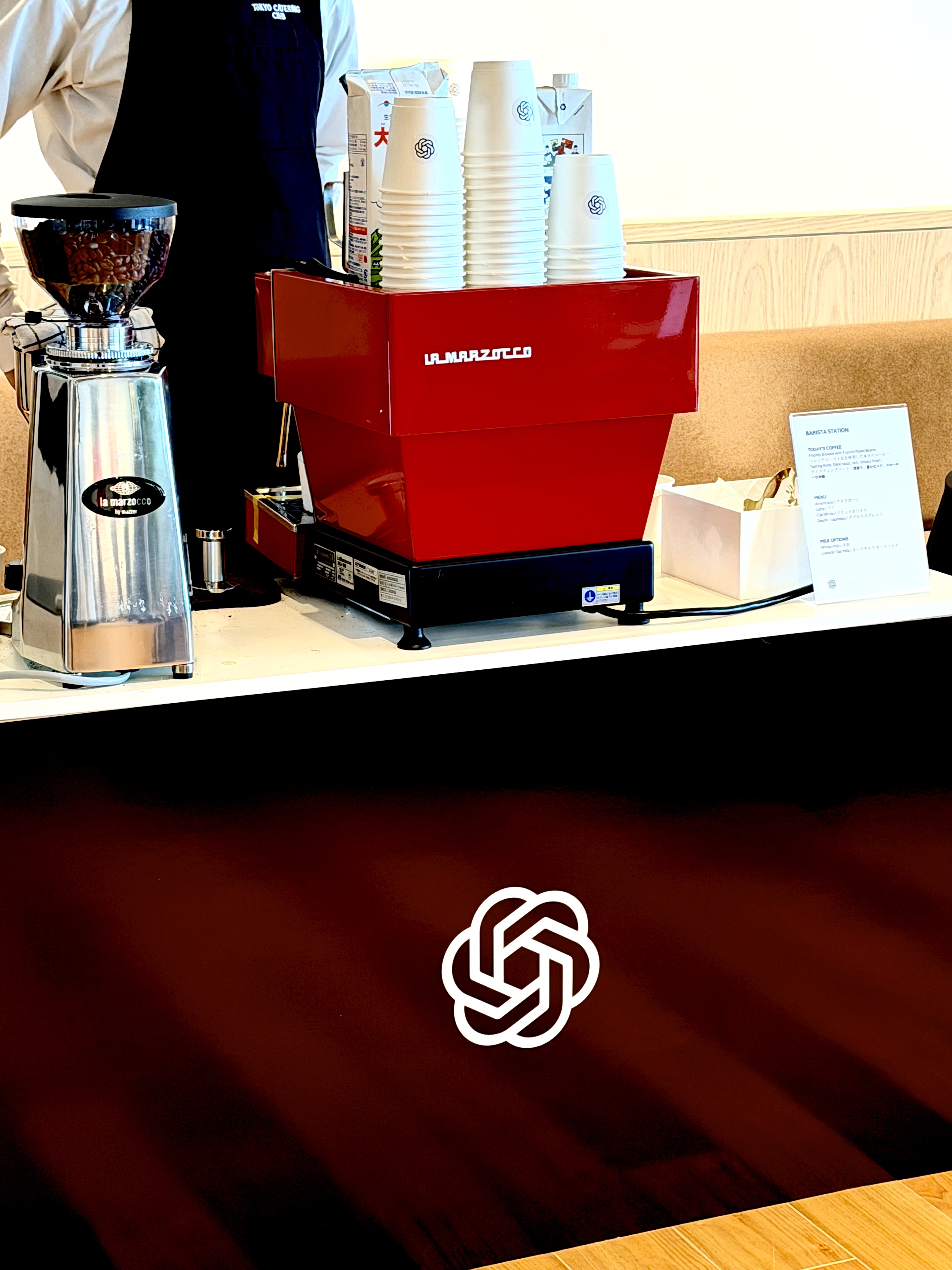
Tokyo Catering Club designs fully branded specialty coffee stations for corporate activations in Tokyo.
Depending on the event, this can include:
- Branded counter panels
- Personalised cups and sleeves
- Custom printed menus
- Live barista service
- Espresso-based drinks
- Manual filter coffee
- Cold brew
- Matcha and tea-based drinks
- Event-specific signature drinks
- Alternative milk options as standard
Alternative milks are not treated as special requests.
They are part of the baseline expectation for modern international hospitality.
For technology company events, this often includes Oatside oat milk, soy milk, almond milk and lactose-free options available as standard.
The station becomes:
- A natural gathering point
- A decompression zone
- A networking anchor
- A visible branded moment
- An integrated part of the attendee experience
For many technology events, it is the single most photographed hospitality element of the day.
It also creates one of the rare moments in a full-day business programme where guests naturally pause, talk and reset.
Operating Inside Tokyo Office Towers
This is one of the biggest differences between operating in Tokyo and operating in many Western markets.
Corporate venues inside Tokyo office towers function under strict building management protocols.
These may include:
- Freight elevator scheduling
- Loading dock reservations
- Security clearance procedures
- Ventilation restrictions
- Fire regulations
- Waste removal requirements
- Floor protection obligations
- Narrow installation windows
- Restrictions on water access
- Restrictions on open flame
- Restrictions on onsite cooking
Many hospitality providers underestimate these constraints.
Tokyo Catering Club manages them as standard operating procedure.
Operations are planned around the real conditions of the venue — not an idealised version of the venue.
This includes:
- Direct coordination with building management
- Pre-event site inspections
- Equipment autonomy
- Controlled load-in and load-out scheduling
- Full waste removal compliance
- Venue-specific operational planning
- Backup planning when venue infrastructure is limited
This experience is particularly important in areas such as Shibuya, Roppongi, Marunouchi, Toranomon, Akasaka, Shinjuku and Ginza, where corporate venues often operate under strict security and loading conditions.
For international companies unfamiliar with Japan, this local operational knowledge can determine whether an event feels effortless or becomes stressful.
Coordinating with Overseas Headquarters
Technology company events in Tokyo are frequently organised from abroad.
The event lead may be in:
- San Francisco
- London
- Singapore
- Zurich
- New York
- Seoul
- Paris
Meanwhile, the Tokyo office may be handling local coordination for a headquarters team with limited experience operating events in Japan.
This creates a communication gap that many local vendors struggle to bridge.
Tokyo Catering Club is structured specifically for international coordination.
Our role often includes:
- Bilingual communication
- English-speaking operational management
- Rapid adaptation
- Direct communication with overseas stakeholders
- Translation of local constraints into executable solutions
- Coordination with Japanese venues and building management
- Clear written planning documents
- Menu adaptation for international audiences
Instead of waiting for problems to emerge onsite, our team identifies logistical and operational risks upstream and proposes alternatives early in the planning process.
For international technology companies operating under tight timelines, this becomes critical.
A global team should not need to understand every detail of Tokyo building logistics.
They need a local partner who already does.
VIP Management Inside High-Energy Tech Environments
Technology company events often combine informal atmospheres with highly senior attendees.
Guests may include:
- Founders
- Global executives
- Investors
- Board members
- Strategic partners
- Visiting leadership teams
- Senior engineers
- Government or institutional guests
The challenge is subtle.
The hospitality level must remain executive-grade without creating visible separation from the broader event environment.
Tokyo Catering Club manages this through:
- Briefed floor teams
- Discreet service prioritisation
- Controlled guest flow management
- Attentive but non-intrusive hospitality
- Awareness of key attendees throughout the programme
- Coordination with assistants, event leads or local teams where required
The result is a hospitality environment that feels fluid, calm and intentional — even inside fast-moving corporate settings.
VIPs are supported.
The rest of the room does not feel secondary.
Case Study Examples
The following examples illustrate the type of operational frameworks Tokyo Catering Club regularly designs for international technology environments in Tokyo.
AI Executive Meetings — Marunouchi
Tokyo Catering Club supported hospitality operations for executive-level meetings involving an international AI-focused organisation operating inside a Tokyo corporate tower.
The programme included:
- Breakfast hospitality
- Branded coffee service
- Dietary mapping
- Bilingual coordination
- Executive floor hospitality
- Afternoon refreshment support
- Evening networking reception management
Operations were executed under strict venue logistics and restricted building access windows.
The objective was not to create a visible catering display.
The objective was to make hospitality feel integrated into the working rhythm of the day.
Multi-Day Hackathon — Shibuya – 120 pAX
A multi-day engineering activation required a hospitality structure capable of adapting to fluctuating attendance and extended working sessions.
The programme required:
- Continuous replenishment
- Overnight operational resets
- Branded specialty coffee station
- Rotating dietary management
- Hydration logistics
- Grab-and-go formats
- Flexible service timing
Hospitality operations were designed to remain continuously accessible without interrupting active development sessions.
For engineering environments, this kind of reliability matters more than formality.
The best system is the one that works without becoming a topic of discussion.
Gemini 3 Hackathon Tokyo — Shibuya – 200 PAX
Tokyo Catering Club supported hospitality operations for the Tokyo edition of the Gemini 3 Hackathon organised by Cerebral Valley in partnership with Google DeepMind and Supercell.
Hosted inside Google’s Shibuya office environment, the event brought together AI engineers, founders, gaming creators and international technology operators for a full-day AI × gaming sprint in Tokyo.
The hospitality framework included:
- Continuous specialty coffee and hydration service
- Full-day food replenishment
- Grab-and-go accessibility for active development teams
- Dietary management across international attendee profiles
- Operational adaptation around hackathon schedules and live presentations
- Hospitality support designed to remain accessible without interrupting active working sessions
For high-intensity technology environments such as hackathons, hospitality infrastructure becomes part of the operational ecosystem itself — supporting concentration, energy management and the overall rhythm of the event.
More information regarding the event can be found here:
https://cerebralvalley.ai/e/gemini-3-tokyo-hackathon
Product Launch Reception — Tokyo – 350 PAX
An evening hospitality activation for an international technology brand required a format combining premium service, brand visibility and efficient corporate venue logistics.
The operation included:
- Live beverage service
- Premium finger food circulation
- Branded presentation elements
- Venue logistics management
- Reception flow planning
- Coordination inside a restricted-access corporate environment
The service needed to feel polished without becoming rigid.
This is often the balance required for product launches, investor receptions and brand-led technology events in Tokyo.
Why International Tech Teams Choose Tokyo Catering Club
Technology company events in Tokyo require more than food production.
They require:
- Operational precision
- Adaptability
- Bilingual coordination
- Hospitality awareness
- Venue experience
- Dietary control
- Brand sensitivity
- A detailed understanding of Tokyo’s corporate event infrastructure
Tokyo Catering Club combines hospitality production with real operational event management designed specifically for international business environments.
This same approach has shaped our work across large-scale corporate events, luxury retail activations, embassy receptions, automotive launches, executive dinners and complex off-site hospitality projects.
For more examples of our operating style, see:
- Corporate Catering in Tokyo: Insights from Tokyo Catering Club
- Pop-Up Catering in Tokyo: How We Ran a Full Live Kitchen Inside a Motorcycle Garage
- Tokyo Catering Club Insights
From AI summits and startup activations to executive offsites and investor receptions, our role is to create hospitality systems that support the flow of the event itself.
Planning a Technology Company Event in Tokyo?
Tokyo Catering Club designs and operates hospitality programmes for:
- Technology companies
- AI organisations
- Startups
- Gaming studios
- Crypto platforms
- Venture capital firms
- International innovation teams operating events in Japan
From executive offsites and investor meetings to hackathons, product launches and full-day activations — our role is to manage the hospitality operation so your team can remain focused on the event itself.
Tokyo Catering Club
Shibuya, Tokyo
Contact: contact@tokyocateringclub.com
Website: www.tokyocateringclub.com
Instagram: @tokyocateringclub
Tokyo Catering Club is a premium hospitality production and corporate catering company based in Tokyo, specialising in international business events, executive hospitality and complex operational environments across Japan.
東京におけるテクノロジー企業向けケータリング
グローバルテック企業・AI企業・イノベーションチームが日本でのイベントに求めるホスピタリティ
[Tokyo Catering Club – Technology Event Hospitality in Tokyo]
By Tokyo Catering Club — Shibuya, Tokyo
テクノロジー企業は、一般的な企業とは異なる動き方をします。
そのイベントもまた、その特性を反映しています。
サンフランシスコ本社主導の社内オールハンズミーティング、渋谷で複数日にわたり開催されるハッカソン、丸の内のオフィスタワーで行われるエグゼクティブ向けワークショップ、東京でのプロダクトローンチレセプション、海外から来日するAI関連チームのVIP訪問。
求められるものは明確です。
進行は速く、オペレーション上の許容範囲は非常に限られています。
Tokyo Catering Club は、東京を拠点に、国際的なテクノロジー企業、AI関連企業、ゲームスタジオ、暗号資産・フィンテック領域、スタートアップ、イノベーションチーム向けのホスピタリティオペレーションを設計・運営しています。
これまでのイベントサポートには、Amazon、OpenAI、GitHub、Kraken、Supercell、Google関連プロジェクト、東京で開催された国際AIカンファレンスに関連する案件も含まれています。
彼らが求めているのは、単なる「ケータリング会社」ではありません。
高いパフォーマンスが求められるビジネス環境の中に、自然に組み込まれるホスピタリティパートナーです。
テックイベントは通常の企業イベントとは異なります
テクノロジー業界におけるコーポレートホスピタリティは、単なるランチデリバリーではありません。
多くの場合、一日を通じたプログラムとして設計されます。
例えば:
- 到着時のコーヒーサービス
- ワーキングブレックファスト
- 午前中のリフレッシュメント
- 構成されたランチ
- 午後のエナジーステーション
- 継続的なドリンク補充
- イブニングレセプション
- エグゼクティブや投資家向けのVIPサポート
- 複数日イベントでの継続補充
ホスピタリティの各要素は、集中力、エネルギー、ゲスト体験、進行のスムーズさに直接影響します。
目的は、単に食事を提供することではありません。
一日の仕事の流れを妨げることなく、参加者のパフォーマンスを支えることです。
テック企業向けイベントで多くのケータリング会社が失敗するポイント
テックイベントでは、オペレーション上の弱点がすぐに見えてしまいます。
よくある問題は以下の通りです。
- 固定的なサービス形式が進行を妨げる
- 重すぎる食事が午後の集中力を低下させる
- 食事制限への対応が後回しになる
- 海外本社と日本側ベンダー間の英語コミュニケーションが弱い
- 東京のオフィスタワー特有の搬入・セキュリティ制約に対応できない
- 会場設備に依存しすぎる
- スケジュール変更への対応が遅い
テック環境では、進行が速く変化します。
ホスピタリティチームは、それ以上に柔軟でなければなりません。
Tokyo Catering Club は、柔軟性、コミュニケーションスピード、そして会場に依存しないオペレーション力を前提に設計しています。
フルデイ・ホスピタリティ設計
テクノロジー企業のイベントでは、「正午に30名分のランチ」という標準的な依頼だけでは不十分です。
Tokyo Catering Club は、イベント全体の流れに合わせてホスピタリティを設計します。
重要なのは、何を提供するかだけではありません。
- 参加者がいつエネルギーを必要とするか
- いつ集中して作業しているか
- どのタイミングでサービスが見えてよいか
- どのタイミングではサービスが見えない方がよいか
- 人が自然に集まる場所はどこか
- どの補充を静かに行うべきか
- どの場面でプレミアムな演出が必要か
こうした視点から、ケータリングはイベントインフラの一部になります。
ソーシング:オーガニック、農家直送、そして本当にフレッシュな食材
米国やヨーロッパに本社を持つテクノロジー企業は、食材の品質、透明性、鮮度に対する明確な期待を持っています。
Tokyo Catering Club では、可能な限り以下のような食材・調達を重視しています。
- 旬の国産野菜
- 生産者や産地が明確な食材
- オーガニック食材
- 農家直送の野菜や果物
- 高品質な乳製品とプラントベース代替品
- 自家製ソース、ドレッシング、コンディメント
- 工業的な既製品への過度な依存を避けた調理
目的は「ウェルネス」という言葉を掲げることではありません。
一日を通じて働く人の集中力とコンディションを支える、本物の食事を提供することです。
食事制限は「別対応」ではなく、オペレーションとして管理します
国際的なテクノロジー企業のイベントでは、食事制限は例外ではありません。
一つのチームの中に、以下のような要件が同時に含まれることは珍しくありません。
- ベジタリアン
- ヴィーガン
- ハラール対応
- グルテンフリー
- 乳製品不使用
- ナッツアレルギー
- 宗教上の食事制限
- 個人的な食の好み
Tokyo Catering Club では、事前に共有された食事制限をメニュー全体と照合し、制作前に確認します。
目的は、対象者を「特別メニュー」として分けることではありません。
できる限り自然に、食の多様性を全体のホスピタリティ体験に統合することです。
ブランド仕様のコーヒーステーション
現代のテックイベントにおいて、コーヒーステーションは単なる付帯サービスではありません。
多くの場合、会場内の中心的な交流ポイントになります。
Tokyo Catering Club では、企業イベント向けにブランド仕様のスペシャルティコーヒーステーションを設計・運営しています。
内容には以下が含まれます。
- ブランドパネル
- ロゴ入りカップやスリーブ
- カスタムメニュー
- ライブバリスタサービス
- エスプレッソドリンク
- ハンドドリップ
- コールドブリュー
- 抹茶やティーベースのドリンク
- イベント専用シグネチャードリンク
- オルタナティブミルクの標準対応
オーツミルク、豆乳、アーモンドミルク、ラクトースフリー対応は、現代的な国際イベントでは特別対応ではなく、標準的な期待値になっています。
Tokyo Catering Club では、Oatside オーツミルクを含む複数の代替ミルクをイベント内容に応じてご用意しています。
東京のオフィスタワーでのオペレーション
東京での企業イベントでは、会場そのものの制約が非常に重要です。
特に、渋谷、六本木、丸の内、虎ノ門、赤坂、新宿、銀座のオフィスタワーでは、ビル管理上のルールが厳格です。
例えば:
- 搬入口の予約
- 貨物エレベーターの時間指定
- セキュリティ申請
- 火気使用制限
- 換気制限
- 廃棄物撤去ルール
- 床養生
- 搬入・撤収時間の制限
- 水道設備の制限
- 現場調理の制限
Tokyo Catering Club は、こうした制約を前提としてオペレーションを設計します。
会場の理想形ではなく、実際の条件に合わせて計画を立てます。
海外本社との連携
東京で開催されるテクノロジー企業イベントは、日本国外から企画されることが多くあります。
イベント担当者がいる場所は、サンフランシスコ、ロンドン、シンガポール、ニューヨーク、チューリッヒ、パリなどさまざまです。
一方で、日本側のチームは、東京での実務調整を任されているケースがあります。
Tokyo Catering Club は、こうした国際的な調整に対応できる体制を整えています。
- 英語でのコミュニケーション
- バイリンガルのオペレーション管理
- 海外チームとの直接調整
- 日本側会場との連絡
- ローカル制約の説明
- 実行可能な代替案の提示
- 明確な進行・メニュー資料の作成
海外チームが東京のビル管理や搬入ルールをすべて理解する必要はありません。
必要なのは、それを理解し、実行できる現地パートナーです。
東京でテクノロジー企業向けイベントをご検討ですか?
Tokyo Catering Club は、東京でイベントを開催する以下のような企業・チーム向けにホスピタリティプログラムを設計・運営しています。
- テクノロジー企業
- AI関連企業
- スタートアップ
- ゲームスタジオ
- 暗号資産・フィンテック企業
- ベンチャーキャピタル
- 国際的なイノベーションチーム
エグゼクティブオフサイト、投資家ミーティング、ハッカソン、プロダクトローンチ、フルデイイベントまで、Tokyo Catering Club はイベント全体の流れを支えるホスピタリティオペレーションを担当します。
Tokyo Catering Club
Shibuya, Tokyo
Contact: contact@tokyocateringclub.com
Website: www.tokyocateringclub.com
Instagram: @tokyocateringclub
Tokyo Catering Club は、東京・渋谷を拠点とするプレミアム・ホスピタリティプロダクションおよび法人向けケータリング会社です。国際ビジネスイベント、エグゼクティブホスピタリティ、複雑な会場オペレーションを伴うイベントを専門としています。